
mountain bike height guide
Navigating the world of mountain biking requires understanding that a proper fit is paramount for both comfort and performance on the trails.
Finding the correct bike size dramatically enhances control, efficiency, and overall enjoyment, preventing potential injuries and maximizing your riding potential.
Why Proper Bike Fit Matters
A correctly sized mountain bike isn’t merely about comfort; it’s fundamentally linked to control, power transfer, and injury prevention. An ill-fitting bike can lead to strain on your back, knees, and wrists, diminishing your enjoyment and potentially causing long-term issues. When a bike is too small, maneuverability suffers, and you may feel cramped, hindering efficient pedaling. Conversely, a bike that’s too large can feel unwieldy and difficult to control, especially on technical terrain.
Optimal fit allows for proper weight distribution, enabling you to navigate obstacles with confidence and maintain balance. It ensures efficient power transfer from your legs to the pedals, maximizing your climbing ability and speed. Remember, standard bike sizes are designed for “average” riders, but individual body proportions vary significantly. Therefore, relying solely on height isn’t enough; considering inseam and standover height is crucial for a truly personalized fit.
Understanding Frame Sizes: Inches vs. Centimeters
Mountain bike frame sizes are traditionally expressed in inches, though many manufacturers now also provide measurements in centimeters. Historically, inch measurements referred to the length of the seat tube – the tube running from the bottom bracket to the saddle. However, modern bike geometry is more complex, and seat tube length isn’t always the most reliable indicator of overall bike size.
Centimeter measurements often represent “effective top tube length,” a more accurate gauge of reach – the horizontal distance from the bottom bracket to the head tube. This measurement better reflects how the bike will feel when you’re riding. It’s vital to understand that a 17-inch bike from one brand might fit differently than a 17-inch bike from another due to variations in geometry. Always consult the specific brand’s size chart and consider reach and stack measurements alongside traditional frame size.

Determining Your Ideal Mountain Bike Size
Precisely pinpointing your ideal mountain bike size involves a combination of factors, starting with your height, inseam, and considering standover clearance for optimal control.
Using Height as a Starting Point
Generally, your height serves as an excellent initial guide when selecting a mountain bike frame size, though it’s crucial to remember it’s not the sole determinant. Most manufacturers provide size charts correlating rider height to recommended frame sizes, typically ranging from Extra Small (XS) to Extra Large (XL).
For instance, individuals around 5’4” to 5’7” often find a Small (S) frame suitable, while those between 5’7” and 5’10” may lean towards a Medium (M). Riders ranging from 5’10” to 6’0” frequently fit a Large (L), and those exceeding 6’0” often require an Extra Large (XL). However, these are broad guidelines; individual body proportions and riding style significantly influence the ideal fit.
It’s important to note that modern mountain bike geometry, with longer reach measurements, can sometimes necessitate sizing down from what traditional charts suggest. Always cross-reference height recommendations with inseam measurements for a more accurate assessment.
Inseam Measurement for Accurate Sizing
Beyond height, your inseam provides a more precise measurement for determining the appropriate mountain bike size, directly impacting standover height and pedaling efficiency. To measure, stand with your back against a wall, wearing cycling shoes, and place a book between your legs, mimicking a saddle.
Measure from the top of the book to the floor – this is your inseam. Compare this measurement to the bike manufacturer’s size chart, which typically lists recommended inseam ranges for each frame size. A proper standover height, allowing 1-2 inches of clearance between the top tube and your crotch, is crucial for safety and maneuverability.

Consider that different bike geometries affect effective top tube length; a longer reach may require a smaller frame even with a longer inseam. Utilizing inseam alongside height provides a more personalized and accurate bike fitting approach.
Standover Height: What It Is and Why It’s Important
Standover height refers to the distance between the top tube of your mountain bike and the ground, measured vertically. It’s a critical factor in bike fit, ensuring you have sufficient clearance when straddling the bike while standing. Generally, you should have at least 1-2 inches of clearance, though more is recommended for aggressive trail riding or downhill disciplines.
Insufficient standover height can lead to dangerous situations, particularly during dismounts or technical terrain, potentially causing injury. Conversely, excessive clearance might suggest a frame that’s too large, hindering control and maneuverability.
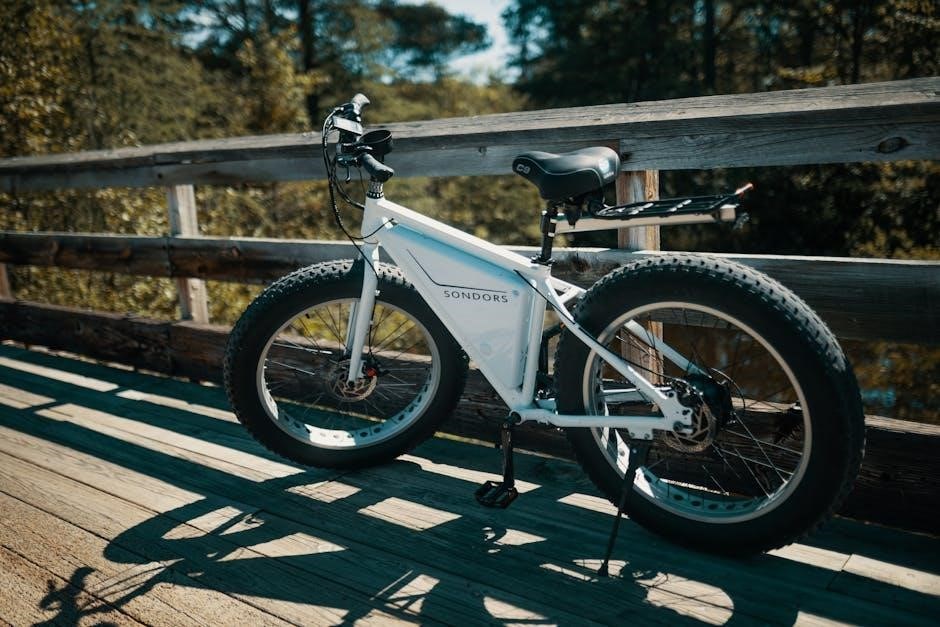
Modern bike geometries, with their sloping top tubes, often prioritize standover height, allowing riders to confidently navigate challenging trails. Always verify standover height against manufacturer specifications and prioritize safety when selecting a bike size.

Mountain Bike Size Charts
Utilizing comprehensive size charts, tailored by height and sometimes inseam, is crucial for narrowing down your ideal mountain bike frame size for optimal fit.
General Mountain Bike Size Chart (Based on Height)
Determining a starting point for your mountain bike size often begins with your height, though it’s not the sole factor; consider it a foundational guideline. Generally, riders between 5’4” and 5’7” typically fit a Small (S) frame, while those ranging from 5’7” to 5’10” usually find a Medium (M) suitable. Individuals between 5’10” and 6’0” often require a Large (L) frame, and those exceeding 6’0” generally need an Extra Large (XL).
However, these are broad estimations, and variations exist between manufacturers. A cyclist at 6’2” might comfortably ride an XL, but a longer torso or shorter legs could necessitate a Large. It’s vital to remember that this chart provides a preliminary suggestion, and further measurements, like inseam, are essential for a precise fit. Always cross-reference with brand-specific charts, as geometry significantly impacts sizing. Don’t solely rely on height; prioritize a comfortable and controlled riding position.
Size Charts by Brand: Specialized, Trek, Giant
Brand-specific sizing is crucial, as geometry varies significantly between Specialized, Trek, and Giant. Specialized often runs slightly larger, meaning you might consider sizing down compared to a Trek or Giant. Trek tends to align closer to standard sizing, while Giant sometimes offers a more compact feel, potentially requiring a size up.
For example, a rider typically fitting a Medium on Trek might need a Medium or even a Large on Specialized. Giant’s sizing often falls in between. Always consult the official size charts on each brand’s website. These charts usually incorporate both height and inseam measurements for a more accurate recommendation. Remember that newer “long, low, and slack” geometries, common in trail and enduro bikes, often encourage sizing down for improved maneuverability. Prioritize checking the specific model’s chart, as sizing can differ even within a brand’s lineup.
Women’s Specific Mountain Bike Sizing
Women’s specific mountain bikes address anatomical differences, typically featuring narrower handlebars, shorter crank arms, and a frame geometry designed for shorter torsos and longer legs relative to height. These adjustments enhance comfort and control. However, not all women require a women’s specific bike; it depends on individual body proportions.
Traditional sizing charts based solely on height can be misleading. Women often have longer legs and shorter arms compared to men of the same height. Therefore, inseam measurement is particularly vital. Many brands offer size recommendations based on both height and inseam. Don’t hesitate to test ride both women’s specific and unisex models to determine the best fit. A professional bike fit can further refine the setup, ensuring optimal comfort and performance, regardless of the bike’s initial designation.

Factors Influencing Bike Size Choice
Beyond height, riding style, bike geometry—reach, stack, and head tube angle—and individual body proportions significantly impact the ideal mountain bike size selection process.
Riding Style: Trail, Enduro, Downhill
Your preferred mountain biking discipline heavily influences the optimal bike size. For general trail riding, a size prioritizing maneuverability is often preferred, potentially sizing down slightly. However, with the emergence of longer, slacker geometry bikes, even trail riders may find themselves comfortably on larger frames.
Enduro biking, demanding both climbing efficiency and downhill confidence, often benefits from a larger frame for stability at speed and a more centered riding position. Downhill bikes, prioritizing stability above all else, almost always require the largest possible frame size to provide maximum control and confidence on challenging terrain.
Consider that a larger frame allows for more weight distribution and stability, while a smaller frame enhances agility and playful handling. Ultimately, the best size depends on individual preference and the specific characteristics of the bike being considered.
Bike Geometry: Reach, Stack, and Head Tube Angle
Modern mountain bike geometry significantly impacts sizing decisions, moving beyond simple height charts. Reach, the horizontal distance from the bottom bracket to the head tube, is crucial; a longer reach generally provides more stability at speed, often necessitating a larger frame size. Stack, the vertical distance, influences the overall riding position – higher stack offers a more upright, comfortable posture;
The head tube angle also plays a vital role. Slacker angles (lower numbers) enhance downhill stability, while steeper angles improve climbing agility. Bikes with longer reach and slacker head tube angles often feel larger, potentially allowing riders to size down without sacrificing stability.
Understanding these measurements allows for a more nuanced fit than relying solely on height. Comparing reach numbers between your current bike and a prospective one is a valuable approach to finding the right size.
Body Proportions: Torso Length and Arm Length
While height is a starting point, individual body proportions dramatically influence optimal mountain bike sizing. Riders with longer torsos may benefit from a slightly longer frame, even if their height suggests otherwise, to avoid a cramped riding position. Conversely, shorter torsos might necessitate a smaller frame to maintain comfortable reach to the handlebars.
Arm length is equally important. Longer arms can comfortably reach wider handlebars, enhancing control, while shorter arms may prefer a narrower setup. A proper fit ensures the rider isn’t overextended or feeling constricted, impacting handling and comfort.
Considering these proportions alongside reach and stack measurements provides a more personalized fit. It’s crucial to assess how your body interacts with the bike, not just relying on generalized size charts.
Fine-Tuning Your Fit
Achieving a perfect fit often requires adjustments beyond frame size; saddle height, handlebar width, and seat position are crucial for maximizing comfort and control.
Saddle Height Adjustment
Proper saddle height is fundamental to efficient pedaling and preventing knee strain. A common starting point involves positioning the saddle so your leg is almost fully extended at the bottom of the pedal stroke, with a slight bend remaining. To refine this, sit on the bike with your heel on the pedal at its lowest point; your leg should be straight.
Then, switch to the ball of your foot on the pedal and repeat – this should create a slight bend in your knee. Incremental adjustments are key; raising the saddle too much can cause rocking, while lowering it too much reduces power transfer. Consider your riding style; trail riders might prefer a slightly lower saddle for increased maneuverability, while cross-country riders may opt for a higher position for efficiency. Experimentation and listening to your body are vital for finding the optimal height;
Handlebar Width and Stem Length
Handlebar width and stem length significantly impact bike control and comfort. Wider handlebars generally offer increased stability and leverage, particularly beneficial for technical trails and downhill riding, but can feel cumbersome on smoother terrain. Narrower handlebars provide quicker steering response, favored by cross-country riders.
Stem length dictates your reach to the handlebars; a shorter stem provides a more upright, responsive feel, while a longer stem stretches you out for a more aggressive, stable position; Adjustments should be made in conjunction with each other. If you feel cramped, consider a shorter stem or wider handlebars. If you lack stability, a longer stem or narrower handlebars might be beneficial. Small changes can make a big difference, so experiment to find what feels most natural and controlled for your body and riding style.
Seat Position: Fore/Aft Adjustment
Proper seat position, specifically fore/aft adjustment, is crucial for efficient pedaling and preventing knee strain. This adjustment impacts how your knee aligns with the pedal spindle at the 3 o’clock position. When viewed from the side, a plumb line dropped from the bony part of your knee should intersect the pedal spindle.
Moving the seat forward shifts your weight distribution, enhancing climbing efficiency but potentially increasing pressure on the knees. Sliding it backward promotes descending stability and comfort, but can reduce pedaling power. Fine-tuning this position requires experimentation. A slightly forward position is often preferred for aggressive trail riding, while a more centered position suits all-around use. Prioritize comfort and efficient power transfer; avoid positions causing knee pain or discomfort during prolonged rides.
Common Sizing Mistakes to Avoid
Frequently, riders select bikes too small, hindering movement and handling, or too large, causing control issues. Ignoring standover height also leads to discomfort and potential injury;
Choosing a Bike That’s Too Small
Opting for a mountain bike that’s too small might seem like a safe bet, especially for beginners, but it introduces a cascade of problems impacting your riding experience. A frame that’s undersized restricts your movement, limiting your ability to shift your weight effectively – a crucial element for navigating technical trails and maintaining balance. This constraint hinders proper handling, making it difficult to confidently tackle descents or power through climbs.
Furthermore, a too-small bike often forces a compromised riding position, potentially leading to discomfort and even pain in your knees, back, and shoulders. You’ll find yourself cramped, unable to fully extend your arms and legs, reducing pedaling efficiency and overall control. While it might feel easier to maneuver in tight spaces initially, the long-term consequences of a poor fit outweigh any perceived benefits. Remember, a comfortable and efficient ride is paramount for enjoying the sport and progressing your skills.
Choosing a Bike That’s Too Large
Selecting a mountain bike that’s too large presents a different set of challenges, often impacting stability and control. While it might seem appealing to “grow into” a bigger frame, an oversized bike can feel unwieldy and difficult to maneuver, especially on technical terrain. Reaching the handlebars becomes a stretch, compromising your ability to maintain a balanced and responsive riding position. This extended reach can lead to fatigue and reduced steering precision.
A larger frame also diminishes your ability to move around on the bike, hindering weight distribution and making it harder to react to changing trail conditions. Standover height becomes a concern, potentially leading to discomfort or even injury during dismounts. Ultimately, a bike that’s too big feels less connected and more intimidating, hindering your confidence and enjoyment on the trails. Prioritize a frame that allows for comfortable reach and control, rather than simply opting for a larger size.
Ignoring Standover Height
Neglecting standover height during mountain bike sizing is a common, yet significant, mistake. Standover height – the clearance between the top tube and your crotch while standing over the bike – is crucial for safety and maneuverability. Insufficient standover height creates a risk of injury during sudden dismounts, particularly on challenging trails where quick reactions are essential. It limits your freedom of movement, hindering your ability to confidently navigate obstacles.
Even a small difference in standover height can impact your comfort and control. A bike with adequate standover height allows you to confidently maneuver the bike, shift your weight, and react to unexpected terrain changes. Always verify that you have at least an inch or two of clearance, depending on your riding style and terrain. Prioritizing standover height ensures a safer and more enjoyable riding experience, preventing potential accidents and maximizing your confidence on the trails.

Resources for Finding Your Size
Utilize online bike size calculators and professional bike fit services for personalized recommendations; local bike shops offer invaluable expertise to pinpoint your ideal fit.
Online Bike Size Calculators
Numerous online bike size calculators are readily available, offering a convenient starting point for determining your ideal mountain bike size. These tools typically request your height, inseam, and sometimes arm length to provide a recommended frame size range. Websites like Cyclistshub.com provide detailed charts and calculators, visually demonstrating the correlation between rider height and appropriate bike size.
However, it’s crucial to remember that these calculators offer estimations, not definitive answers. They serve as a helpful initial guide, but individual body proportions and riding style significantly influence the optimal fit. Always cross-reference calculator results with brand-specific size charts, as sizing can vary between manufacturers like Specialized, Trek, and Giant. Consider these tools as a first step, supplementing them with professional advice or in-person fitting at a local bike shop for a truly personalized assessment.
Professional Bike Fit Services
Investing in a professional bike fit is arguably the most accurate method for determining your ideal mountain bike size and setup. Experienced bike fitters conduct comprehensive assessments, considering not only your height and inseam but also your flexibility, riding style, and any physical limitations. They utilize dynamic fitting techniques, observing you ride to identify areas for improvement and optimize your position.
A professional fit goes beyond simply selecting the correct frame size; it involves adjusting saddle height, handlebar reach, and stem length to ensure optimal comfort and efficiency. This personalized approach minimizes the risk of injury and maximizes power transfer, enhancing your overall riding experience. While more expensive than online calculators, a professional bike fit is a worthwhile investment for serious riders seeking peak performance and long-term comfort on the trails.
Local Bike Shop Expertise
Your local bike shop offers a valuable resource for determining the right mountain bike size, bridging the gap between online resources and professional fitting services. Knowledgeable staff can provide personalized recommendations based on your height, inseam, and intended riding style, guiding you through the available size options for different brands and models.
They can also offer static fit assessments, helping you assess standover height and reach to ensure a comfortable and safe riding position. Don’t hesitate to ask questions and test ride various bikes to get a feel for what fits best. Experienced shop employees often have firsthand knowledge of how different bikes ride and can offer valuable insights based on rider feedback. Leveraging their expertise can save you time and money, ensuring you choose a bike that truly fits your needs.
Leave a Reply
You must be logged in to post a comment.