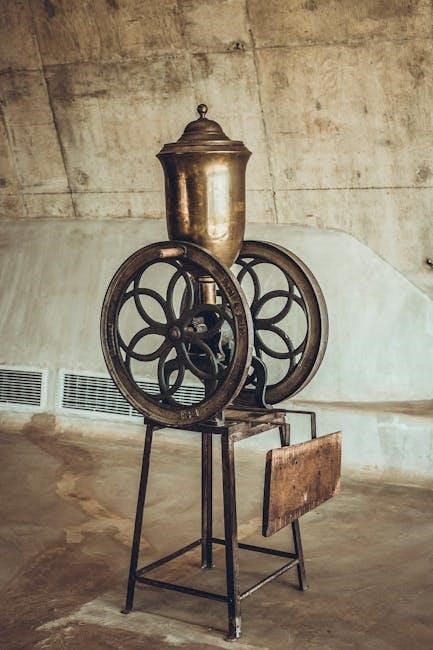
manual coffee grinder vintage
Vintage manual coffee grinders represent a tangible link to coffee’s past, embodying artisanal skill and a slower, more deliberate brewing experience for enthusiasts.
The Allure of Hand-Cranked Coffee
The captivating charm of hand-cranked coffee stems from a return to simplicity and mindful preparation. Unlike the instant gratification of electric grinders, a manual grinder demands engagement, transforming the brewing process into a ritual. This tactile experience connects the user to coffee’s rich history, evoking a sense of nostalgia for a bygone era.
Beyond the sensory experience, hand-grinding offers superior control over particle size, crucial for optimal extraction and flavor. The deliberate pace encourages appreciation for the bean’s journey, from origin to cup. Vintage grinders, in particular, possess a unique aesthetic appeal, often showcasing intricate designs and craftsmanship that elevate the entire coffee experience. They are more than tools; they are beautiful objects with a story to tell.
Why Collect Vintage Coffee Grinders?
Collecting vintage manual coffee grinders is driven by a passion for history, craftsmanship, and the evolving coffee culture. These machines represent a tangible connection to the past, offering a glimpse into how coffee was enjoyed in earlier times. Each grinder tells a story, reflecting the design aesthetics and manufacturing techniques of its era.
Beyond historical significance, these grinders are often beautiful objects, showcasing intricate details and durable construction. The thrill of the hunt – discovering a rare or well-preserved model – adds to the appeal. Furthermore, collecting can be a rewarding investment, as certain grinders appreciate in value over time, becoming cherished heirlooms and conversation pieces.
A History of Manual Coffee Grinders
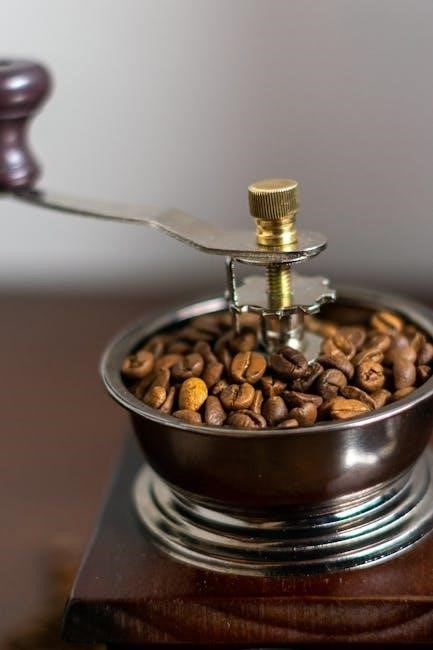
Manual coffee grinders evolved from basic mortar-and-pestle methods to refined mechanisms, with materials transitioning from wood to durable metals over centuries.
Early Coffee Grinding Methods (Pre-1800s)
Before dedicated coffee grinders existed, the process of preparing coffee involved considerably more manual labor. Initially, coffee beans were crushed using simple tools like mortars and pestles – a method borrowed from ancient grain processing techniques. This required significant effort and yielded inconsistent results, with varying particle sizes impacting the final brew.
As coffee consumption grew in popularity during the 17th and 18th centuries, individuals sought more efficient methods. Some utilized repurposed tools, such as small metal mills originally designed for spices or grains. These were adapted for coffee, but still demanded considerable physical exertion. The lack of specialized equipment meant that achieving a uniform grind was challenging, influencing the taste and quality of the resulting coffee. These early methods highlight the dedication of coffee lovers even before the advent of purpose-built grinders.
The Emergence of Dedicated Grinders (1700s-1800s)
The 1700s and 1800s witnessed a pivotal shift with the development of coffee grinders specifically designed for coffee beans. Early iterations were often constructed from materials like wood and metal, reflecting the available technology and craftsmanship of the time. These weren’t the sleek designs we recognize today; they were robust, functional tools built for repeated use.
As demand increased, so did innovation. Grinders began to incorporate mechanisms for easier operation, though they remained entirely manual. The focus was on improving efficiency and consistency in the grinding process. This period marked a transition from adapting existing tools to creating specialized equipment, laying the foundation for the diverse range of vintage manual coffee grinders that collectors prize today. These early dedicated grinders represent a significant step in coffee preparation.
Materials Used in Early Grinders: Wood, Metal, and Beyond
Early manual coffee grinders showcased a fascinating evolution in material usage. The 1700s primarily featured wood construction for the grinder bodies, often paired with metal grinding components. As technology advanced, cast iron became increasingly prevalent in the 1800s, offering durability and precision. Brass was also common, lending a touch of elegance to some designs.
Later models experimented with glass and ceramic elements, though metal remained dominant. The choice of material impacted both the grinder’s functionality and aesthetic appeal. Wooden grinders often displayed intricate carvings, while metal versions prioritized robustness. These materials reflect the era’s manufacturing capabilities and the growing demand for efficient coffee preparation, shaping the landscape of vintage coffee grinders.
Identifying and Dating Vintage Manual Coffee Grinders
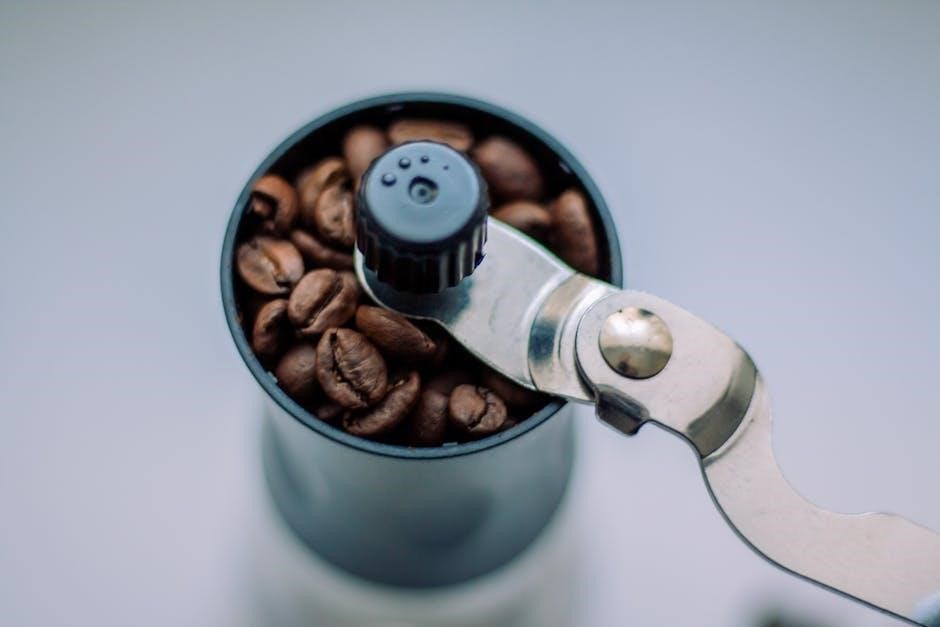
Determining a vintage grinder’s age involves scrutinizing patents, model numbers, and country codes often stamped on its base or upper sections for clues.
Decoding Patents and Model Numbers
Vintage manual coffee grinders frequently bear patent dates and model numbers, serving as crucial identifiers for establishing their age and origin. These markings, typically found on the grinder’s base or lid, offer direct links to specific manufacturing periods. Patent dates indicate when the core design was legally protected, providing a terminus ante quem – a date before which the grinder couldn’t have been produced.
Model numbers, while sometimes less straightforward, can be cross-referenced with historical catalogs and manufacturer records. Understanding the numbering systems employed by different companies is key; some used sequential numbers, while others incorporated codes representing features or production years. Careful research utilizing online databases and collector communities can unlock the secrets hidden within these numerical designations, revealing valuable insights into a grinder’s history and place within a manufacturer’s product line.
Country Codes and Manufacturing Origins
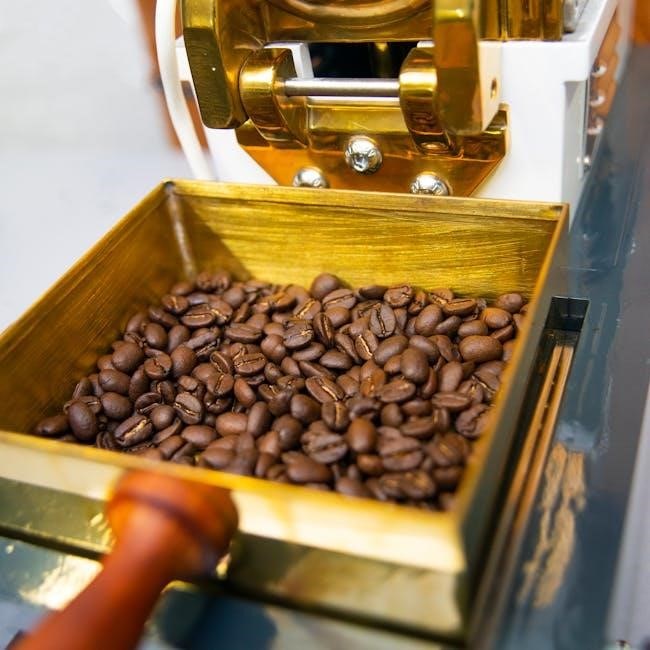
Determining the country of origin for a vintage manual coffee grinder provides significant clues about its manufacturing techniques and historical context. Many grinders feature country codes or markings indicating where they were produced, with the United States, Germany, and England being prominent centers of production. American grinders often showcase robust cast iron construction, while German models frequently exhibit intricate detailing and precision engineering.
European grinders, particularly those from the 19th and early 20th centuries, often utilized higher-quality materials and craftsmanship. Identifying these origins isn’t always straightforward; some grinders were assembled from parts sourced from multiple countries. Examining the style, materials, and markings collectively helps establish a grinder’s provenance and understand its place within the global coffee culture.
Analyzing Design Features by Era
Dating a vintage manual coffee grinder relies heavily on scrutinizing its design features. Early 18th-century grinders often display simple wooden constructions or basic metal frames, reflecting the limited manufacturing capabilities of the time. As technology advanced, 19th-century models showcased more ornate cast iron designs, frequently incorporating decorative elements and wall-mounting options.
The early 20th century brought streamlined designs and a greater emphasis on functionality. Features like adjustable grind settings and improved hopper mechanisms became common. Observing the evolution of these elements – from rudimentary hand-cranked systems to more refined mechanisms – provides valuable insight into the grinder’s age and manufacturing period, revealing a tangible history of coffee preparation.
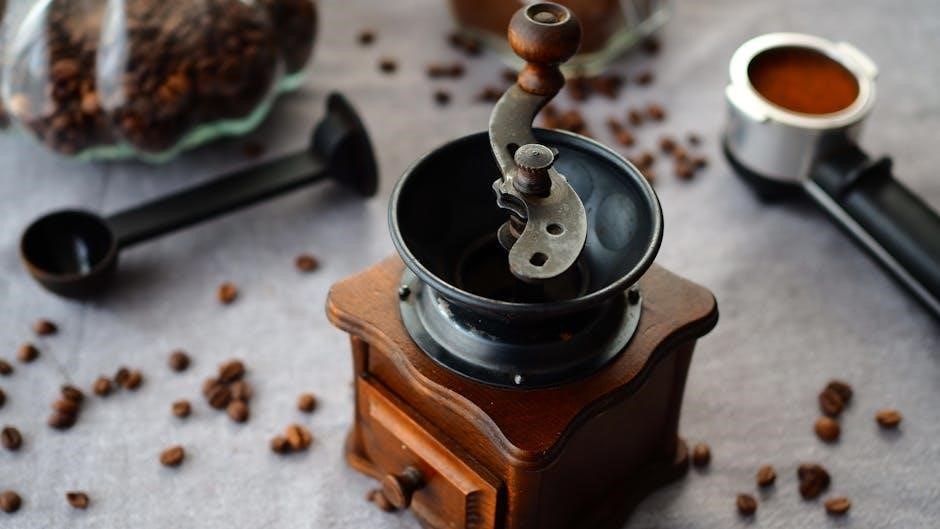
Key Design Elements and Their Time Periods
Vintage manual coffee grinders showcase evolving designs: box styles in the 1800s, wall-mounted options gaining popularity, and varied crank/hopper functionalities.
Box Grinders: A Common 19th-Century Style
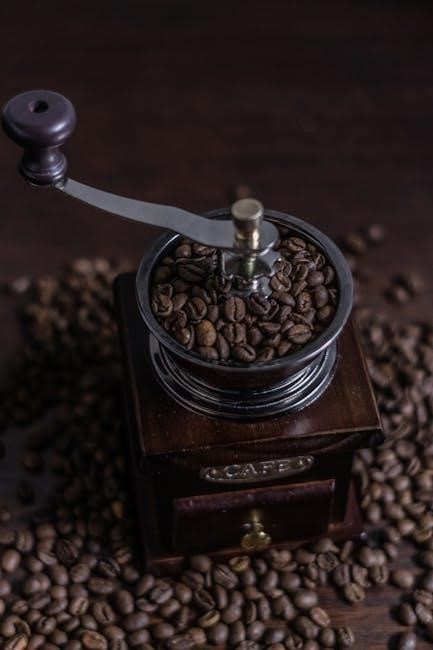
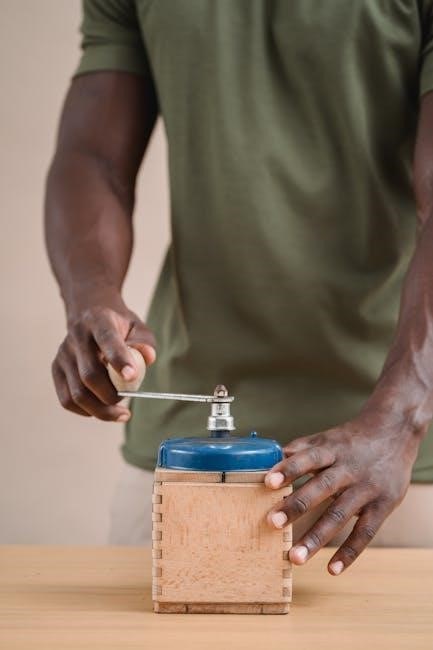
Box grinders, prevalent throughout the 19th century, represent a foundational design in manual coffee grinder history. These grinders typically featured a wooden box encasing the grinding mechanism, often constructed with cast iron components for durability. The beans were fed into the top, then crushed between a rotating burr and a stationary plate within the box.
Their simple construction made them relatively affordable and accessible, contributing to their widespread adoption in households. Variations existed, with some models incorporating decorative elements or featuring different wood finishes. Identifying features include the box-like shape, a front-mounted crank, and often, a drawer to collect the ground coffee. These vintage grinders offer a charming glimpse into a bygone era of coffee preparation, embodying both functionality and a rustic aesthetic.
Wall-Mounted Grinders: Popularity and Characteristics
Wall-mounted coffee grinders gained significant popularity in the late 19th and early 20th centuries, particularly in commercial settings like grocery stores and restaurants. Their design allowed for convenient operation and saved counter space, making them a practical choice for businesses. These vintage grinders were typically secured to a wall with screws, featuring a large hopper for holding beans and a crank for operation.
Characteristically, they often boasted ornate cast iron detailing and a robust build quality. The ground coffee would dispense into a bin or container positioned below. While less common in homes, they represent a fascinating aspect of manual coffee grinding history, showcasing a shift towards more efficient and accessible coffee preparation methods for a wider audience.
Crank and Hopper Variations: Evolution of Functionality
The evolution of manual coffee grinders is clearly visible in the variations of their cranks and hoppers. Early models often featured simple wooden cranks and relatively small hoppers, requiring frequent refilling. As designs progressed, cranks became more ergonomic, sometimes incorporating gears for increased leverage and ease of use.
Hopper materials transitioned from wood to metal, and their size increased to accommodate larger quantities of beans. Some vintage grinders showcased decorative hopper tops, adding an aesthetic element. The grinding mechanism itself also evolved, with different burr configurations impacting grind consistency. These changes demonstrate a continuous effort to improve functionality and user experience in manual coffee preparation.
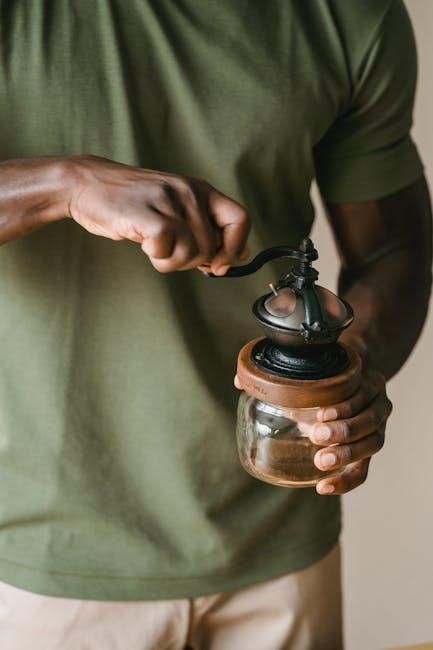
Common Manufacturers and Their Markings
Vintage manual coffee grinders were produced by companies like Enterprise, Landers, Frary & Clark, and others, each leaving unique markings for identification.
Enterprise Manufacturing Company
Enterprise Manufacturing Company stands as a prominent name in the realm of vintage manual coffee grinders, renowned for its extensive production throughout the 19th and early 20th centuries. Based in Philadelphia, Pennsylvania, Enterprise became a leading force in household manufacturing, including a diverse range of coffee mills. Their grinders often feature cast iron construction, showcasing durability and a classic aesthetic.
Identifying Enterprise grinders involves looking for markings such as “Enterprise Mfg. Co.” or variations thereof, frequently found on the base or body of the mill. They produced a wide variety of styles, from basic box grinders to more ornate wall-mounted models. The quality of their craftsmanship and the prevalence of their products contribute to their collectibility today, making them a favorite among enthusiasts seeking a piece of coffee history.
Landers, Frary & Clark
Landers, Frary & Clark (LF&C) represents another cornerstone in the history of vintage manual coffee grinders. Established in Connecticut, this company evolved through several iterations, becoming a significant producer of kitchen and household goods, including a vast selection of coffee mills from the mid-19th to mid-20th centuries. LF&C grinders are known for their robust construction and diverse designs, ranging from simple, functional models to more decorative pieces.
Identifying LF&C grinders often involves searching for markings like “L.F.&C.” or “Landers, Frary & Clark” stamped onto the base or body. They produced grinders under various brand names, adding to the complexity of identification. Their widespread production and enduring quality make LF&C grinders highly sought after by collectors, representing a significant chapter in coffee culture.
Other Notable Vintage Grinder Makers
Beyond Enterprise and Landers, Frary & Clark, numerous other manufacturers contributed to the rich landscape of vintage manual coffee grinders. Companies like Boston Coffee Mill Co., and various European makers, produced unique and collectible grinders, each with distinct characteristics. These lesser-known brands often showcase innovative designs or specialized features, appealing to dedicated collectors seeking rarity.
Identifying these makers can be challenging, often requiring detailed research and comparison of design elements. Many smaller companies lacked consistent markings, making attribution difficult; However, uncovering these hidden gems adds to the excitement of collecting, revealing the diverse ingenuity present in the evolution of coffee grinding technology and craftsmanship.
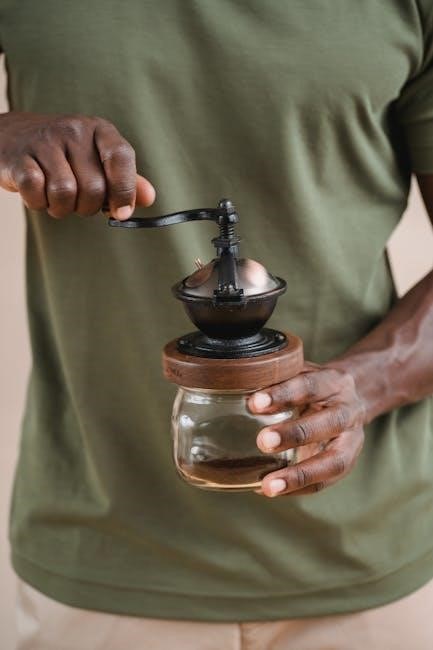
Restoration and Preservation of Vintage Grinders
Careful cleaning, addressing rust, and repairing common issues are crucial for preserving the functionality and aesthetic appeal of these historical manual coffee grinders.
Cleaning and Maintenance Techniques
Regular maintenance is paramount for preserving a vintage manual coffee grinder’s longevity. Begin by disassembling the grinder as much as possible, carefully noting the order of parts. For wooden components, a gentle wipe-down with a slightly damp cloth is sufficient; avoid harsh chemicals or excessive moisture. Metal parts, particularly those with rust, benefit from a specialized rust remover, followed by a thorough cleaning with mild soap and water.
Pay close attention to the burrs, removing any accumulated coffee oils with a stiff brush or a specialized burr cleaning tool. Lubricate moving parts—crank mechanisms and bearings—with a food-safe lubricant to ensure smooth operation. After cleaning, ensure all parts are completely dry before reassembly. Consistent, gentle cleaning prevents buildup and preserves the grinder’s functionality for years to come.
Repairing Common Issues
Vintage manual coffee grinders, despite their robust construction, can develop issues over time. A common problem is a stiff or seized crank mechanism, often resolved with careful lubrication and gentle manipulation. Cracked or broken wooden components may require professional repair or replacement, sourcing matching wood being crucial; Rust, a frequent concern, necessitates removal with appropriate solutions, followed by protective coating application.
Burr alignment is vital for consistent grinding; misaligned burrs can lead to uneven results. Inspect and adjust as needed. Missing or damaged parts can sometimes be sourced from antique parts suppliers or fellow collectors. When undertaking repairs, prioritize preserving the grinder’s original character and avoid irreversible modifications. Patience and a delicate touch are key to successful restoration.
Protecting Against Rust and Damage
Preserving a vintage manual coffee grinder requires proactive protection against rust and general wear. Regularly wipe down metal surfaces with a soft, dry cloth to remove moisture and oils. Applying a thin coat of food-grade mineral oil to cast iron components creates a protective barrier. Store the grinder in a cool, dry environment, avoiding humidity and temperature fluctuations.
Handle with care during use and cleaning, avoiding forceful movements. Protect wooden parts from direct sunlight and excessive moisture, which can cause warping or cracking. Consider a protective display case to shield against dust and accidental damage. Consistent, gentle maintenance will ensure your grinder remains a beautiful and functional piece of coffee history for years to come.
The Value of Vintage Manual Coffee Grinders
Vintage manual coffee grinders hold value due to rarity, condition, manufacturer, and aesthetic appeal, attracting collectors and coffee history buffs alike.
Factors Influencing Collectibility
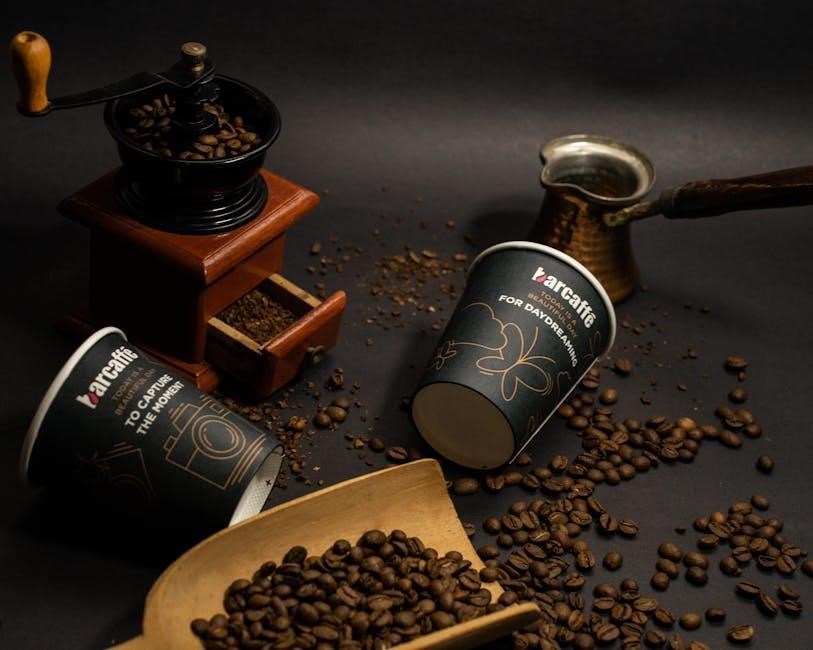
Several key elements determine the collectibility – and therefore the value – of vintage manual coffee grinders. Rarity is paramount; limited production runs or unique models command higher prices. The overall condition significantly impacts value, with well-maintained grinders fetching premiums over those needing extensive restoration. Originality is crucial – grinders retaining all original parts are more desirable.
Manufacturer prestige also plays a role, with brands like Enterprise and Landers, Frary & Clark being highly sought after. Distinctive design features, unusual materials, or intricate ornamentation enhance collectibility. Provenance, or the grinder’s documented history, can add substantial value. Finally, the presence of original paint, decals, or paperwork further increases a grinder’s appeal to collectors seeking authentic pieces of coffee history.
Current Market Trends
The market for vintage manual coffee grinders is currently experiencing robust growth, fueled by a renewed interest in specialty coffee and a desire for aesthetically pleasing, functional antiques. Box grinders and wall-mounted models remain particularly popular, with prices steadily increasing. Online auction platforms and vintage marketplaces are key venues for sales, offering broad reach to collectors.
There’s a growing demand for fully restored grinders, though many collectors also appreciate original patina. Interest extends beyond purely functional pieces; grinders are increasingly valued as decorative objects and conversation starters. Expect to see continued price appreciation for rare and well-preserved examples, reflecting the enduring appeal of these historical artifacts and their connection to coffee culture.
Resources for Appraisals and Sales
For accurate appraisals of vintage manual coffee grinders, consider consulting with specialized antique appraisers familiar with kitchenalia and coffee-related collectibles. Online resources like WorthPoint and LiveAuctioneers provide historical sales data, offering insights into current market values. Reputable auction houses, such as Sotheby’s and Christie’s, occasionally feature significant grinders.
Dedicated online marketplaces like eBay and Etsy are popular for both buying and selling, but require careful vetting of sellers. Antique shops and flea markets can also yield discoveries, though pricing may vary. Joining online coffee collecting forums and communities provides access to expert knowledge and potential buyers, fostering a network for enthusiasts.
Leave a Reply
You must be logged in to post a comment.