
arthur spiderwick’s field guide to the fantastical world
The Spiderwick Chronicles Field Guide: A Deep Dive into a Fantastical World
Arthur Spiderwick’s Field Guide initiated the Spiderwick Chronicles, instantly enthralling readers with its unique concept and fantastical creatures within its pages.
Origins of Arthur Spiderwick and the Guide
The genesis of Arthur Spiderwick’s remarkable Field Guide to the Fantastical World Around You lies with Arthur Spiderwick himself, a historical figure who lived during the 19th century. This wasn’t merely a work of fiction sprung from imagination; it was purportedly compiled by Spiderwick in the early 20th century, documenting his extensive observations of the faerie realm.
He meticulously recorded encounters with creatures most humans remain oblivious to, driven by a desire to understand and catalog this hidden world. The author, Tony DiTerlizzi, envisioned expanding upon Spiderwick’s character, crafting a narrative centered around this fascinating individual and his extraordinary guide. The guide’s creation represents a blend of historical inspiration and imaginative storytelling, laying the foundation for the entire Spiderwick Chronicles series.
Arthur Spiderwick: The Man Behind the Myth
Arthur Spiderwick, though a central figure in the Spiderwick Chronicles, wasn’t initially conceived as a fully-developed character. Tony DiTerlizzi, the co-creator, initially focused on the concept of the field guide itself – a tangible object brimming with fantastical knowledge. However, the guide’s power and allure naturally prompted questions about its creator.
Thus, Arthur Spiderwick emerged, a man driven by a relentless curiosity and a dedication to documenting the hidden world of faeries. He became the lens through which readers experience this realm, his meticulous notes and observations forming the core of the guide. While based on a real person from the 19th century, the narrative expands upon his life, transforming him into a legendary explorer of the unseen.
Early 20th Century Compilation
The narrative establishes that Arthur Spiderwick’s Field Guide wasn’t a spontaneous creation, but rather a culmination of years of observation and research conducted primarily in the early 20th century. This period is crucial, as it frames the guide not as folklore, but as a documented account of a hidden reality.
Spiderwick meticulously compiled his findings, detailing the habits, weaknesses, and lore surrounding various faerie creatures. The guide’s structure reflects this methodical approach, presenting information in a scientific, almost academic manner. This deliberate compilation lends an air of authenticity to the fantastical content, blurring the lines between myth and reality for the reader and establishing the guide’s enduring power.
The Discovery at Spiderwick Estate
The relocation of the Grace family to the dilapidated Spiderwick Estate serves as the catalyst for the guide’s re-emergence into the world. Hidden within the mansion’s walls, the long-forgotten Field Guide is unearthed by Jared, Simon, and Mallory Grace, initiating their extraordinary adventure.
This discovery isn’t merely a plot device; it underscores the guide’s inherent power and its need to be found by those destined to protect it. The estate itself seems to guard the book, and its rediscovery thrusts the children into a conflict with the malevolent Mulgarath, who desperately seeks to control the guide’s knowledge for his own nefarious purposes.
Key Creatures Documented in the Field Guide
Arthur Spiderwick’s meticulous guide details fantastical beings like boggarts, changelings, pixies, and goblins, revealing their behaviors and the dangers they present.
Boggarts: Mischievous and Troublesome
Boggarts, as detailed in Arthur Spiderwick’s Field Guide, are described as mischievous creatures inhabiting secluded areas like swamps, meadows, and old barns. They are notorious for playing pranks on humans, often involving tripping, pushing, or generally causing minor annoyances. However, the guide warns that their pranks can escalate if not addressed.
These creatures are not inherently malicious, but they thrive on chaos and enjoy unsettling people. The Field Guide emphasizes that boggarts are particularly sensitive to iron, which is said to repel them. Successfully dealing with a boggart requires a firm demeanor and a willingness to stand one’s ground, as showing fear only encourages their troublesome behavior. They are a common, yet irritating, presence in the faerie world.
Changelings: The Hidden Substitutes
Changelings, according to Arthur Spiderwick’s Field Guide, represent a particularly unsettling aspect of the faerie world. These creatures are faerie offspring secretly swapped with human babies. The guide details how faeries might leave a sickly or deformed changeling in place of a healthy human infant, hoping to gain a servant or simply cause distress.
Identifying a changeling isn’t straightforward; they often appear outwardly normal, though subtle differences may exist. The Field Guide suggests observing unusual behavior or a persistent illness in a child as potential indicators. Protecting a human baby from being replaced requires preventative measures, like iron placed near the cradle, as faeries are said to avoid the metal. Changelings represent a dark and dangerous intersection between the human and faerie realms.
Pixies: Small but Powerful
Pixies, as meticulously documented in Arthur Spiderwick’s Field Guide, are diminutive faeries possessing surprising strength and a mischievous nature. Despite their small stature – often no larger than a thumb – they are capable of causing significant trouble for humans, employing illusions and trickery.
The guide details that pixies are drawn to shiny objects and enjoy leading travelers astray, particularly in forests. They communicate through a high-pitched, tinkling language, often incomprehensible to humans. While not inherently malicious, pixies are easily offended and quick to retaliate against perceived slights. The Field Guide advises caution and respect when encountering these potent, yet tiny, inhabitants of the faerie world, warning against provoking their ire.
Goblins: Servants of Mulgarath
Goblins, as described within Arthur Spiderwick’s Field Guide, are brutish and unpleasant creatures entirely devoted to the service of the monstrous ogre, Mulgarath. They are characterized by their grotesque appearance – warty skin, pointed ears, and sharp teeth – and a generally foul odor. The guide emphasizes their lack of intelligence, noting they primarily follow orders without question.
These creatures act as Mulgarath’s soldiers and spies, tasked with retrieving the Field Guide and enforcing his will. They are physically strong but clumsy, and easily distracted by shiny objects. Spiderwick’s research details their vulnerability to iron and their aversion to sunlight. The Field Guide warns of their relentless pursuit and the danger they pose, especially when acting under Mulgarath’s command.

Structure and Content of the Field Guide
The Field Guide features introductory sections, faerie world basics, exhaustive species entries detailing thirty-one creatures, and a compelling addendum by Jared Grace.
Arthur Spiderwick’s Field Guide doesn’t simply present fantastical creatures; it prepares the reader for potential encounters. The introduction emphasizes essential preparations for anyone venturing into faerie investigations, stressing the importance of observation and caution. It’s not merely a catalog, but a survival manual for a hidden world.
Readers are advised on how to properly document sightings, understand faerie behavior, and recognize warning signs. The guide highlights the need for specific tools and knowledge to navigate this realm safely. It’s a crucial starting point, establishing the tone of serious research amidst the fantastical elements. This section sets the stage, transforming the reader from a passive observer into an active explorer of the unseen.
Faerie World Basics: Understanding the Rules
Arthur Spiderwick’s Field Guide dedicates significant space to outlining the fundamental rules governing the faerie world. It clarifies that this realm operates under different laws of physics and logic than the human world, demanding respect and understanding. The guide details the importance of avoiding iron, as it is harmful to many fae creatures, and explains the concept of glamour – the faeries’ ability to disguise themselves and their surroundings.
Furthermore, it emphasizes the fae’s adherence to ancient customs and their sensitivity to human belief. Ignoring these rules can have serious consequences, ranging from mischievous pranks to dangerous encounters. This section is vital for anyone hoping to interact with the fae safely and respectfully, providing a crucial framework for navigating this hidden dimension.
Detailed Species Entries: The Core Fourteen
Arthur Spiderwick’s Field Guide meticulously documents fourteen central faerie species, forming the core of the initial narrative. Each entry provides a comprehensive overview, including physical descriptions, habitats, behaviors, and potential dangers. These detailed accounts aren’t merely observational; they offer practical advice for identification and interaction – or avoidance.
Entries cover creatures like boggarts, known for their mischievous nature, and goblins, servants of the menacing Mulgarath. The guide’s illustrations accompany these descriptions, enhancing understanding. These core fourteen aren’t exhaustive, but they represent the most frequently encountered and impactful beings within the Spiderwick world, crucial for the Grace children’s adventures.

Jared Grace’s Addendum: Expanding the Knowledge
Jared Grace’s addendum to Arthur Spiderwick’s Field Guide represents a significant expansion of the original work, reflecting his own experiences and discoveries within the faerie world. Initially, the guide contained entries for thirty-one species, but Jared’s contributions extend beyond simply cataloging new creatures.
His additions include personal observations, updated information on previously documented species, and insights into faerie behavior gleaned from direct encounters. This section demonstrates the living nature of the guide – it’s not a static document, but one that evolves with continued exploration. Jared’s notes offer a more contemporary perspective, bridging the gap between Arthur Spiderwick’s era and the present day.
Illustrations and Artistic Style
Detailed creature illustrations are central to the Field Guide’s appeal, vividly portraying the fantastical beings documented within its pages, enhancing the immersive experience.
Detailed Creature Illustrations
The illustrations within Arthur Spiderwick’s Field Guide are not merely decorative; they are integral to understanding the fantastical creatures described. Each entry benefits from meticulously rendered depictions, bringing boggarts, pixies, goblins, and others to life with remarkable detail.
These aren’t polished, idealized renderings, but rather feel like authentic field observations – sketches and notes a naturalist might create while studying elusive wildlife. The style evokes a sense of age and authenticity, as if Arthur Spiderwick himself painstakingly documented these beings.
The illustrations aren’t simply about visual appeal; they provide crucial clues to identifying and understanding each creature’s behavior, habitat, and vulnerabilities. They are a cornerstone of the Field Guide’s immersive quality, allowing readers to truly believe in the hidden world around them.
The Evolution of the Art Style
The artistic presentation of Arthur Spiderwick’s Field Guide wasn’t static; it underwent a subtle yet significant evolution. Initial editions featured a distinct aesthetic, aiming for a convincingly antique and hand-drawn quality, mirroring a 19th-century naturalist’s journal. This involved a deliberately rough texture and a limited color palette, enhancing the sense of authenticity.
Later releases, however, saw a refreshing of the artwork. While retaining the core aesthetic, the illustrations were refined with greater clarity and detail. This update aimed to appeal to a broader audience while preserving the original charm.
The refreshed art maintains the feeling of aged documentation, but with improved visual impact, ensuring the fantastical creatures remain captivating for new generations of readers exploring the Spiderwick universe.
Visual Representation of the Faerie World
Arthur Spiderwick’s Field Guide doesn’t merely describe the faerie world; it visually constructs it. The illustrations are integral to understanding the creatures and their environment, presenting a unique blend of realism and fantasy. Detailed depictions of boggarts, pixies, and goblins aren’t simply imaginative renderings, but feel grounded in a believable, albeit hidden, ecosystem.
The artwork emphasizes the faeries’ connection to nature – their habitats, behaviors, and appearances are all interwoven with the natural world. This visual approach reinforces the idea that the faerie realm exists alongside our own, unseen but ever-present.
The guide’s imagery successfully conveys a sense of wonder and danger, inviting readers to believe in the possibility of a hidden, magical reality.
The Field Guide’s Role in the Spiderwick Chronicles
Arthur Spiderwick’s Field Guide is central to the narrative, acting as both a protective object and a key to unlocking the secrets of the faerie realm.
Protecting the Guide from Mulgarath
The Field Guide’s vulnerability to Mulgarath is a driving force throughout the Spiderwick Chronicles. Mulgarath, a powerful and malevolent ogre, relentlessly seeks the Guide, understanding its immense power and the control it offers over the faerie world. The Grace children – Jared, Simon, and Mallory – quickly realize the gravity of their discovery and the necessity of safeguarding the book from falling into his clutches.
Their struggle isn’t merely about protecting a book; it’s about preventing Mulgarath from dominating both the human and faerie realms. The Guide’s knowledge, detailing the weaknesses and habits of various faeries, would grant Mulgarath an unparalleled advantage. Consequently, the children are thrust into a dangerous conflict, employing cunning and bravery to conceal and defend the Field Guide, becoming its unlikely guardians against a formidable foe.
The Guide as a Source of Power
Arthur Spiderwick’s Field Guide isn’t simply a record of faerie creatures; it’s a conduit to understanding and, consequently, wielding power within the hidden world. The detailed observations and documented weaknesses of each species provide the Grace children – and any reader – with the knowledge needed to navigate and interact with the fae. This isn’t a power of brute force, but of informed action and strategic awareness.
The Guide allows its possessor to anticipate faerie behavior, identify illusions, and even protect themselves from harmful enchantments. It’s a key to unlocking the secrets of the faerie world, transforming a seemingly ordinary family into active participants in a centuries-old conflict. The Field Guide empowers them to defend themselves and ultimately, to protect the balance between worlds.
Unlocking the Secrets of the Faerie World
Arthur Spiderwick’s Field Guide serves as the definitive key to understanding the intricate rules and hidden pathways of the faerie realm. Beyond simply identifying creatures, the Guide details their habits, vulnerabilities, and the specific conditions governing their existence; It reveals that the faerie world isn’t chaotic, but operates under a complex set of natural laws, albeit different from our own.
Through its meticulous entries, the Guide unveils the interconnectedness of the fae and their influence on the human world. It explains how to perceive illusions, navigate hidden territories, and interpret the subtle signs of faerie presence. Ultimately, the Field Guide doesn’t just reveal what exists, but how and why, granting its reader a profound understanding of a previously invisible reality.

Legacy and Impact of the Field Guide
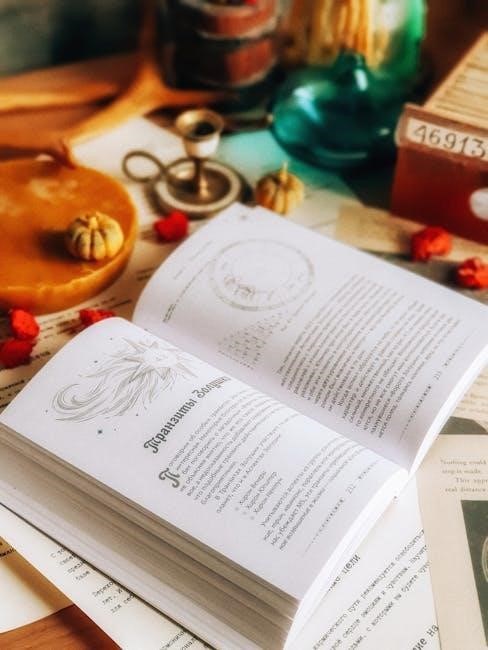
Arthur Spiderwick’s Field Guide profoundly influenced young readers, sparking imaginations and fostering a love for fantasy, while continuing to captivate audiences today.
Influence on Young Readers
Arthur Spiderwick’s Field Guide resonated deeply with young readers, offering a compelling blend of adventure, mystery, and fantastical creatures. The book’s unique presentation, mimicking a genuine field guide, encouraged a sense of discovery and fostered imaginative play. Children were captivated by the idea of a hidden world existing alongside their own, populated by boggarts, pixies, and goblins.
The series sparked a renewed interest in folklore and mythology, prompting many young readers to explore similar themes in literature and art. It encouraged observation of the natural world, inspiring children to look for signs of the fantastical in their own backyards. Furthermore, the relatable characters – Jared, Simon, and Mallory – provided positive role models for bravery, resourcefulness, and sibling loyalty, solidifying the Spiderwick Chronicles’ lasting impact on a generation of readers.
The Continued Popularity of the Series

Arthur Spiderwick’s Field Guide and the subsequent Spiderwick Chronicles maintain a strong and enduring popularity, even two decades after their initial publication. This sustained appeal stems from the series’ timeless themes of family, courage, and the power of belief. The immersive world-building and engaging narrative continue to captivate new generations of readers, fostering a dedicated fanbase.
The franchise’s expansion beyond the original books – including a feature film, video games, and ongoing merchandise – has further cemented its place in popular culture. The refreshed art and updated editions demonstrate a commitment to keeping the series relevant and accessible. Ultimately, the enduring magic of the Spiderwick Chronicles lies in its ability to transport readers to a world where anything is possible, ensuring its continued success for years to come.
Expanding the Spiderwick Universe
Arthur Spiderwick’s Field Guide served as a launchpad for a significantly expanded universe beyond the initial trilogy. Holly Black and Tony DiTerlizzi collaborated on further books, delving deeper into the lore and introducing new faerie creatures and storylines. This expansion wasn’t limited to literature; the world found new life in a feature film adaptation, broadening its reach to a wider audience.
Furthermore, the franchise spawned video games and various merchandise, solidifying its presence in popular culture. The authors’ continued interest in the world suggests potential for future installments, perhaps exploring previously hinted-at characters or undiscovered corners of the faerie realm. The enduring appeal of Spiderwick allows for creative exploration, promising a continually evolving and captivating fantastical world for fans.
Leave a Reply
You must be logged in to post a comment.